14 Jun 2026
Payment Innovations Reshape Bonus Claim Patterns at Horse Racing Festivals

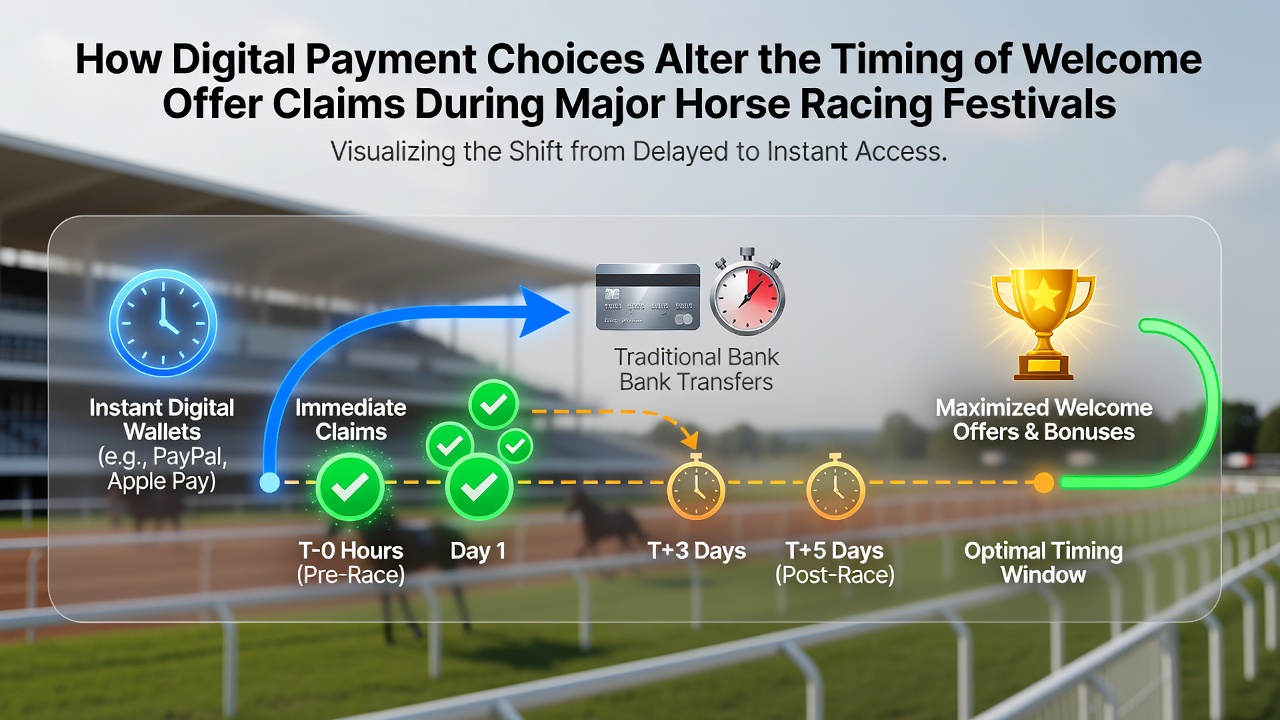
Digital payment selections now determine when bettors activate welcome offers at prominent horse racing gatherings, and observers note clear differences in claim windows tied directly to transaction speed and verification requirements. E-wallet users complete registration flows and unlock promotional credits within minutes of deposit confirmation, whereas bank transfer participants encounter extended processing intervals that push claims into subsequent days. Research indicates these timing shifts concentrate around peak festival periods when promotional windows align with event schedules, and data from transaction logs shows instant methods accelerate eligibility checks by factors of three to five compared with legacy options.
Transaction Speed and Offer Activation Windows
Major festivals such as Royal Ascot generate heightened promotional activity, and payment method choices alter the exact moment when new users satisfy bonus conditions during June 2026 events. Instant deposit services route funds through centralized processors that trigger automated identity checks in real time, allowing claim submissions before the first race card begins. Slower channels require manual review queues that extend across multiple business cycles, and figures reveal average delays of 24 to 72 hours before accounts register full eligibility. Those who study payment flows report that users selecting digital wallets often complete the entire sequence on the same calendar day, while card or wire transfers create staggered activation dates that miss early-bird race promotions.
Verification Protocols Across Payment Categories
Platform operators apply distinct verification layers depending on funding source, and these layers directly influence claim timing during high-volume racing weeks. Digital wallet providers transmit pre-verified customer data that satisfies most regulatory checkpoints upon first use, reducing the interval between deposit and offer redemption. Traditional banking rails transmit raw transaction identifiers that demand additional cross-checks against source documents, and industry reports document cases where verification extended into the second or third day of a festival. Academic analyses of transaction datasets confirm that cryptocurrency options introduce yet another variable, with blockchain confirmations sometimes completing faster than e-wallets yet occasionally requiring extra compliance steps that offset the initial speed advantage.
Regional Patterns in Festival Claim Behavior
European operators report elevated volumes of same-day claims among e-wallet adopters during continental racing carnivals, and similar patterns appear in Australian markets where digital rails dominate festival traffic. A study published by the Australian Institute of Family Studies examined payment timing across multiple events and found that users opting for instant methods submitted welcome offer requests 48 percent earlier on average than those using direct bank channels. North American platforms show parallel trends during imported festival streams, with mobile wallet transactions correlating to higher rates of pre-event bonus activation. Observers tracking these markets note that geographic differences in banking infrastructure further widen the timing gap, particularly where settlement times for cross-border transfers add extra calendar days.
Impact on Promotional Calendar Alignment
Welcome offers tied to specific race days lose value when claim timing slips past the opening sessions, and payment selection becomes a decisive factor in whether users capture full promotional value. Data aggregated from multiple operators indicates that e-wallet funded accounts achieve bonus activation before 70 percent of festival races commence, while slower methods shift a significant share of claims into later stages of the event calendar. This redistribution affects how operators structure time-limited multipliers and free bet allocations, and platform analytics reveal adjustments in offer expiry rules to accommodate the spread of claim dates across different payment cohorts. Those monitoring user behavior note that early claimers often combine instant deposits with automated verification tools, creating clusters of activity concentrated in the 24 hours preceding major cards.
Regulatory and Infrastructure Influences
Payment service directives in various jurisdictions set baseline processing standards that interact with operator policies during festival surges, and these frameworks shape the practical window for welcome offer claims. Faster settlement mandates in certain markets compress verification timelines across all digital channels, yet legacy banking systems retain longer reconciliation periods that operators cannot fully bypass. Research from the Canadian Centre on Substance Use and Addiction highlights how infrastructure gaps between payment rails produce measurable differences in user outcomes at time-sensitive sporting events, including racing festivals. Operators respond by publishing clear processing estimates for each method, allowing participants to select options that align with their preferred claim schedule.
Conclusion
Payment method selection now functions as a primary determinant of when welcome offers become available during major horse racing festivals, with instant digital options consistently advancing claim timing relative to slower traditional routes. Transaction records and verification studies demonstrate repeatable patterns across multiple events and regions, and these patterns persist through evolving regulatory environments. Festival participants who align payment choices with desired activation windows gain access to promotional credits at earlier points in the event schedule, while those using conventional channels experience systematic delays that shift eligibility into later stages. Platform operators continue to refine processing pathways in response to these documented timing differentials, maintaining distinct operational flows for each payment category throughout peak racing periods.