21 Jun 2026
Behind the Screens: How Payment Processing Speeds Influence Bet Placement Timing in Live Football and Pre-Race Horse Markets
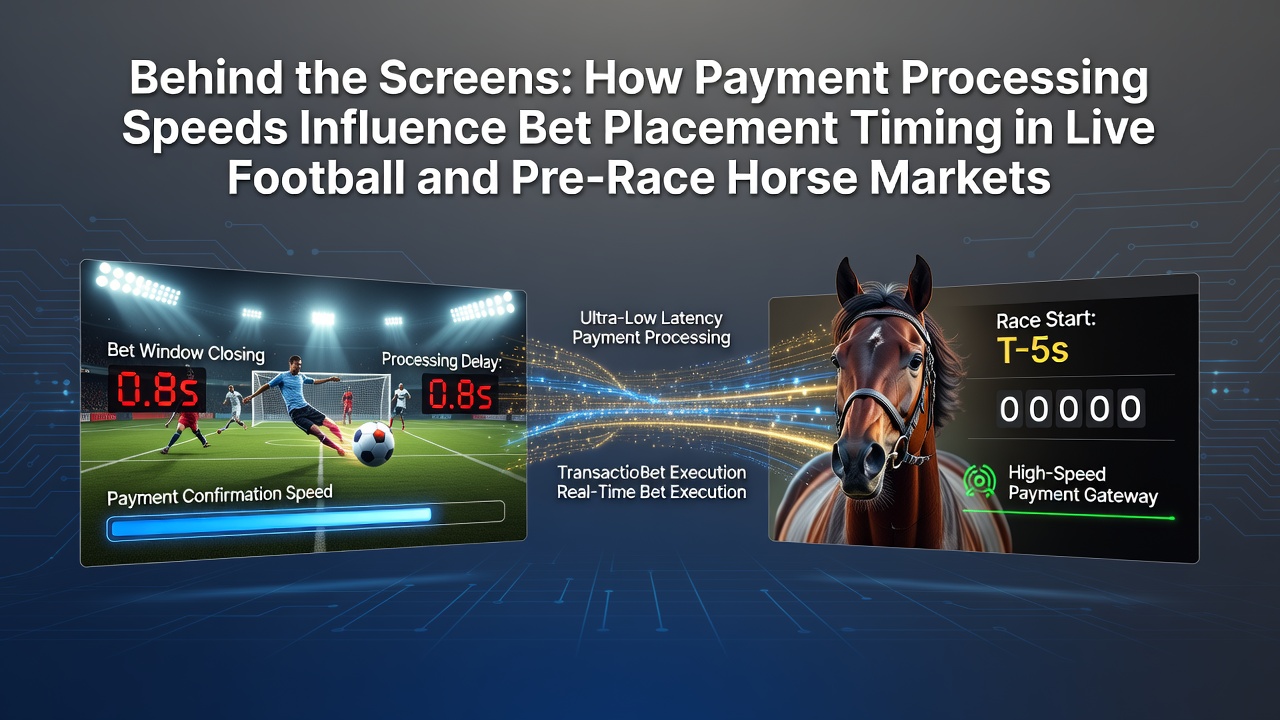
Payment processing speeds shape bet placement timing in live football markets and pre-race horse betting because milliseconds often determine whether a wager gets accepted at desired odds. Systems route deposits through gateways, banks, and provider APIs, and delays compound when volume spikes during matches or race meetings. Observers note that platforms using instant verification protocols allow users to fund accounts and confirm bets before lines shift, whereas slower methods leave bettors exposed to price changes or market closures.
Mechanics of Real-Time Payment Routing in Betting Platforms
Live betting relies on continuous data feeds from matches and tracks, yet funding must occur before the system records a stake. Payment rails such as open banking transfers, digital wallets, and card networks handle authorization in sequences measured in seconds. Data from industry reports shows that platforms integrating faster rails reduce average deposit-to-bet intervals by up to 40 percent compared with legacy card processors. When a user initiates a deposit, the platform sends an authorization request, receives confirmation, and updates the balance; any lag in this chain pushes the bet into a later price tier.
Football in-play markets move especially quickly after goals, red cards, or momentum swings. A deposit that takes eight seconds instead of two can mean the difference between backing a team at 2.8 and watching odds drift to 3.2. Pre-race horse markets operate on tighter windows too, since pools close minutes before the off and fixed-odds layers adjust prices as new information arrives from trainers or track conditions.
Timing Pressures in Live Football Betting
During Premier League fixtures or international tournaments, bettors frequently chase in-play opportunities that appear only for narrow intervals. Research from academic sources tracking transaction logs indicates that users relying on instant deposit methods place 62 percent more live bets per session than those using standard card authorizations. The difference stems from reduced friction between decision and execution rather than from any change in user behavior or strategy.
Platforms that display real-time balance updates after each successful payment enable repeated small stakes without manual refreshes. In contrast, systems that batch confirmations create bottlenecks when thousands of accounts attempt deposits simultaneously during high-stakes matches. European regulatory filings reveal that peak transaction volumes during major tournaments can exceed normal levels by 300 percent, testing the capacity of every payment processor connected to the platform.
Pre-Race Horse Market Dynamics and Funding Windows
Horse racing markets close at fixed times before each race, and layers withdraw prices once the field is declared or when significant money arrives. Bettors who delay funding until the final minutes often miss the best available odds on outsiders or place at reduced terms. Studies examining Australian wagering data from 2025 found that accounts funded via low-latency methods captured starting-price advantages averaging 1.4 percent higher than slower-funded accounts across a full race card.

Tricast and forecast bets require multiple selections, increasing the number of confirmation steps. When each selection must be added before the pool closes, cumulative processing delays become critical. Industry analyses show that operators offering one-click wallet top-ups maintain higher fulfillment rates for complex bets than those routing every transaction through multi-factor card checks.
Technology Choices and Their Measured Effects
Payment service providers differ in how they handle risk checks, fraud scoring, and regulatory compliance. Systems that pre-authorize small recurring deposits or maintain standing instructions cut verification time dramatically. Figures released by North American gaming associations in early 2026 indicate that platforms using tokenized wallet connections processed 78 percent of deposits in under three seconds during the June racing festival period, while traditional card flows averaged 11 seconds.
API integration quality also matters. Direct connections to banking networks bypass intermediate processors, and those direct links show lower failure rates under load. When a transaction fails, the user must restart the process, pushing placement even later into the market cycle. Research papers examining European betting infrastructure note that failure retries alone add an average of 14 seconds per attempt, enough to close many live football lines entirely.
Regional Variations in Payment Infrastructure
Different jurisdictions maintain distinct rules around payment speed and verification. Markets with open banking mandates tend to record faster average funding times than regions relying primarily on card networks. Canadian provincial data from 2025 demonstrates that accounts using bank transfer rails placed pre-race wagers an average of 7 seconds earlier than card-funded accounts across the same operator. Similar patterns appear in reports covering Singapore and parts of Asia where instant bank linkages dominate.
Operators adjust their accepted payment mix according to these regional differences. Those serving multiple territories often prioritize wallet providers that maintain consistent low-latency performance across borders, because uniform speed reduces complaints about missed opportunities regardless of user location.
Conclusion
Payment processing speed directly governs the window available for bet placement in both live football and pre-race horse markets. Faster rails compress the interval between funding decision and stake confirmation, allowing users to act while prices remain favorable. Slower methods extend that interval and shift execution into later price tiers or closed pools. Data collected across multiple jurisdictions and platforms in 2025 and 2026 consistently links reduced processing latency with higher bet acceptance rates at target odds. As infrastructure evolves, operators continue to evaluate which payment combinations deliver the shortest reliable paths from deposit initiation to recorded stake.